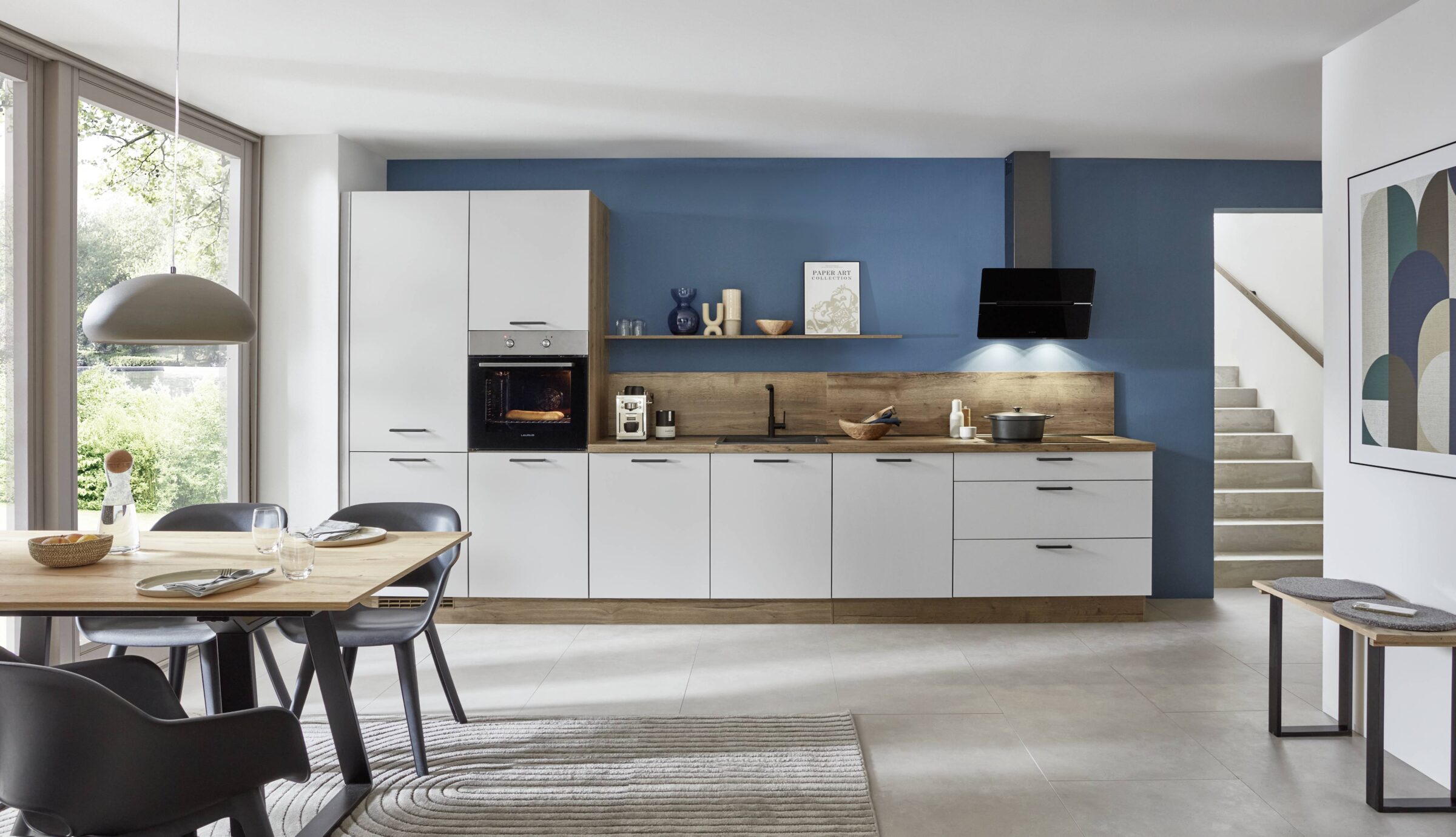
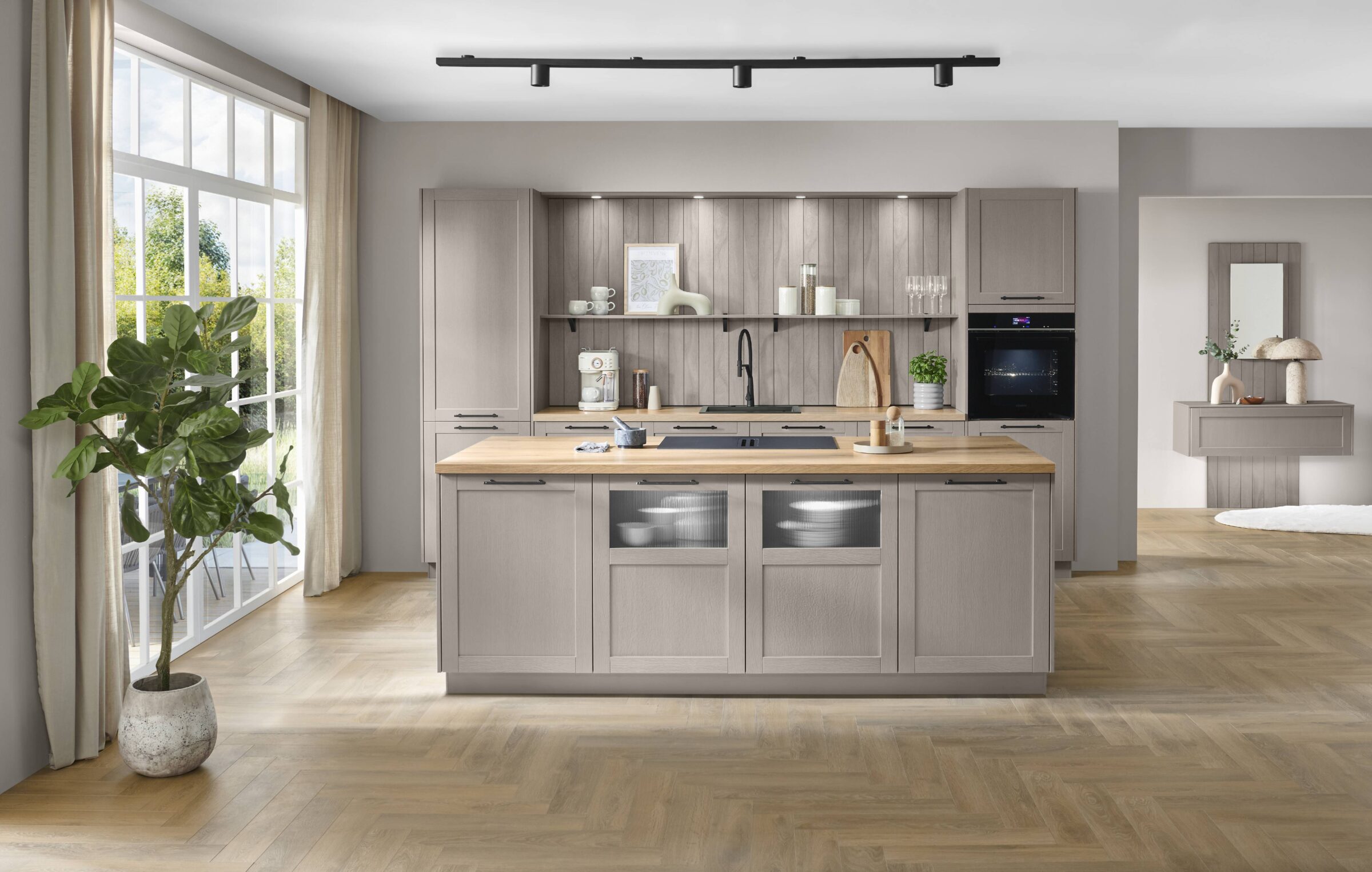
Kitchen flooring plays an important role in both the look and day-to-day performance of a space, particularly in luxury modern kitchens, where design cohesion and practicality must work hand in hand. When homeowners ask what the easiest flooring to install in a kitchen is, they’re usually balancing speed, cost, disruption, and long-term reliability.
The reality is that ease of installation depends on several factors, including the condition of the subfloor, moisture exposure, budget, and whether the work is being done professionally or as a DIY project. Below, we break down the most common kitchen flooring options and explain which ones are genuinely easiest to install — and why.
Factors to Consider When Selecting Kitchen Flooring
Before focusing purely on installation ease, it’s important to step back and consider the wider context. A floor that installs quickly but fails prematurely is rarely the right choice for a kitchen.
Key considerations include:
- Durability – kitchens experience heavy foot traffic, dropped items, and chair movement
- Moisture resistance – spills, steam, and cleaning are unavoidable
- Maintenance – some floors require sealing or specialist cleaning
- Style – the floor should complement cabinetry, worktops, and layout
- Budget – including both material and installation costs
- Installation method – floating, click-fit, glued, or fully bonded
From an installation perspective, floating floors with click systems are generally the simplest, while tiled and stone floors tend to be the most complex.
Popular Kitchen Flooring Options (Installation-Focused Overview)
Some flooring types are naturally easier to install than others:
- Laminate flooring – very DIY-friendly with click-fit systems
- Vinyl flooring (LVT/LVP) – simple installation, excellent tolerance for minor subfloor imperfections
- Engineered wood flooring – moderately easy, depending on board size and fixing method
- Ceramic or porcelain tile – labour-intensive, usually professional
- Solid wood flooring – technically demanding and moisture-sensitive
If ease of installation is your primary concern, laminate and luxury vinyl are usually the front runners.
Laminate Flooring: The Simplest DIY Option
Laminate flooring is widely regarded as the easiest kitchen flooring to install, particularly for homeowners taking a DIY approach.
Modern laminate uses a floating click-lock system that sits over an underlay, meaning it doesn’t need to be glued or nailed down. Boards simply lock together, making installation fast and relatively forgiving.
Why laminate is easy to install:
- Click-fit system with no adhesives
- Lightweight boards that are easy to cut
- Suitable for most flat, dry subfloors
- Quick installation, even in occupied homes
However, laminate is less tolerant of moisture than other materials. For kitchens, it’s essential to choose a kitchen-rated, moisture-resistant laminate and to seal expansion gaps properly.
Luxury Vinyl Tile (LVT): Easy, Forgiving, and Kitchen-Safe
Luxury Vinyl Tile (LVT) and Luxury Vinyl Plank (LVP) are among the easiest and most reliable flooring options for kitchens.
LVT combines simple installation with excellent water resistance, making it particularly well suited to busy households. Many products use click systems similar to laminate, while others are glued down for extra stability.
Installation advantages of LVT:
- Click or glue-down options
- Fully waterproof once installed
- Can cope with minor subfloor imperfections
- Boards and tiles are easy to cut and handle
In¸ luxury modern kitchens, LVT is often chosen because it delivers a high-end look with minimal installation disruption. Wood-effect and stone-effect designs integrate seamlessly with contemporary cabinetry while remaining practical underfoot.
Vinyl Sheet Flooring: Simple but Less Design-Led
Sheet vinyl is another easy-to-install option, especially in smaller kitchens or utility areas. It’s rolled out in large sheets, creating a continuous waterproof surface with minimal joins.
While installation itself is straightforward, achieving a neat finish around units and edges does require care. From a design perspective, sheet vinyl tends to feel less premium than LVT or engineered wood, which is why it’s more common in rental properties or secondary kitchens.
Engineered Wood Flooring: Moderate Difficulty
Engineered wood flooring is easier to install than solid wood but still requires more care than laminate or vinyl.
Many engineered boards use click systems and can be installed as floating floors, but accurate cutting, expansion gaps, and moisture control are essential. Installation is achievable for experienced DIYers, though professional fitting is often recommended for kitchens.
Key points:
- More stable than solid wood
- Requires careful subfloor preparation
- Spills must be managed quickly after installation
Wood Floors: Beautiful but Not the Easiest
Solid hardwood flooring is one of the most demanding options to install in a kitchen. Boards are usually nailed or glued, require precise acclimatisation, and are highly sensitive to moisture.
While wood can look stunning, it’s not ideal if ease and speed of installation are top priorities. Repairs and refinishing also tend to require professional input.
Water-Resistant Flooring and Installation Ease
From an installation standpoint, water-resistant flooring reduces risk. Materials like LVT and porcelain tile are forgiving once installed, whereas laminate and wood rely heavily on correct fitting and ongoing care.
If moisture resistance and easy installation are both priorities, LVT offers the best balance.
Flooring Options for Busy Kitchens
In busy kitchens, ease of installation should go hand in hand with durability.
Best options include:
- LVT for fast installation and long-term resilience
- Laminate for quick upgrades where moisture exposure is controlled
- Vinyl sheet flooring for utility-focused spaces
Tiles and stone perform exceptionally well long-term but are rarely “easy” to install.
DIY vs Professional Installation
DIY installation works well for:
- Laminate flooring
- Click-fit vinyl and LVT
Professional installation is strongly advised for:
- Porcelain and ceramic tiles
- Natural stone
- Solid wood flooring
Professional fitting ensures correct subfloor preparation, expansion allowances, and long-term performance.
Cost Considerations
Easier installation often means lower labour costs. Laminate and vinyl typically sit at the more affordable end of the scale, while tiled and stone floors cost more due to preparation and installation time.
That said, long-term durability should always be factored into the overall value of a flooring choice.
The easiest kitchen flooring to install balances simple fitting methods with long-term durability and everyday practicality.
If your priority is the easiest kitchen flooring to install, laminate and luxury vinyl tile are the clear winners. They install quickly, suit most subfloors, and deliver strong everyday performance when chosen correctly.
For homeowners balancing ease, durability, and design — particularly in modern, open-plan kitchens — LVT stands out as the most versatile and forgiving option, while laminate remains the fastest route to a refreshed kitchen floor.