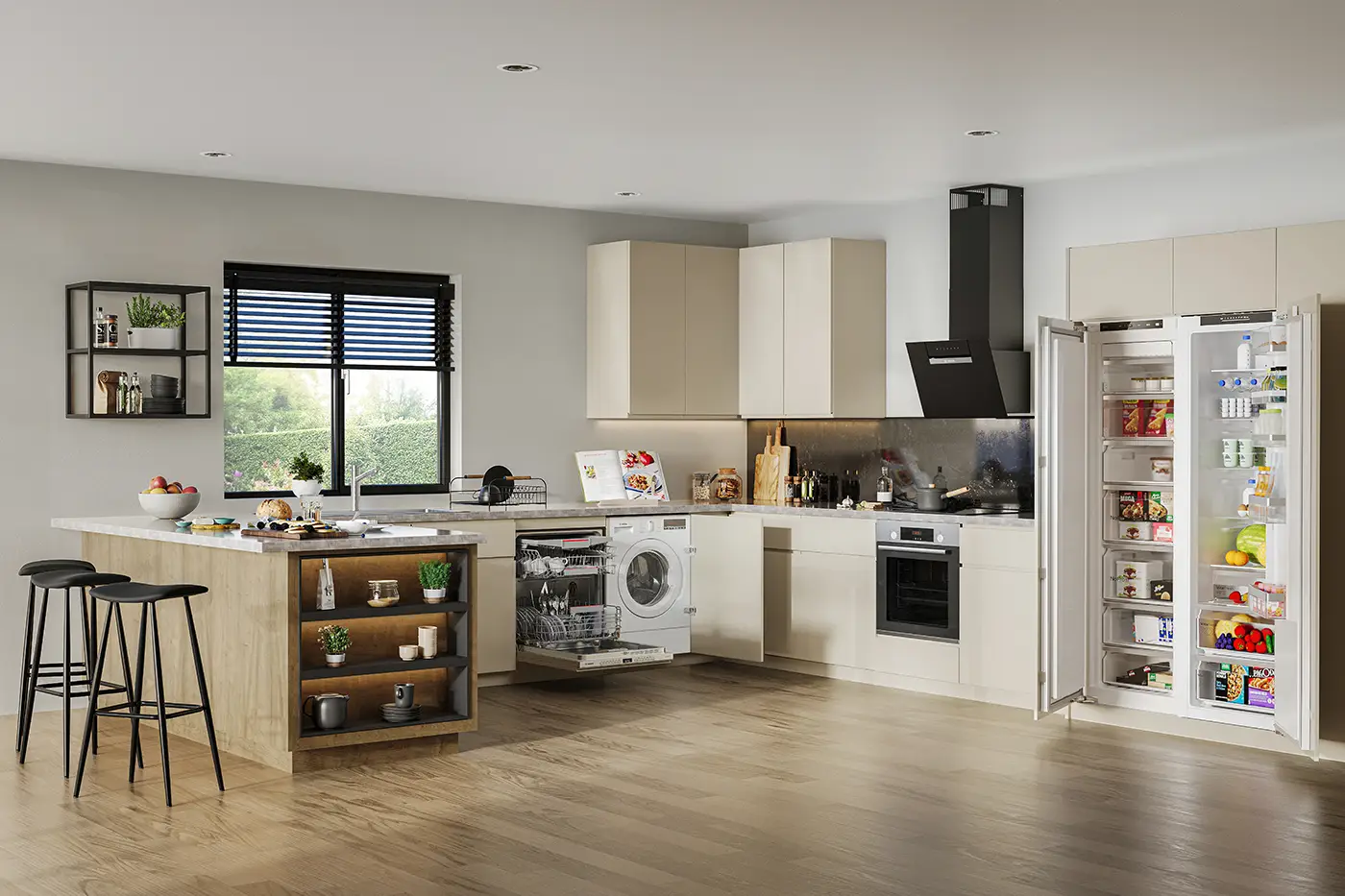
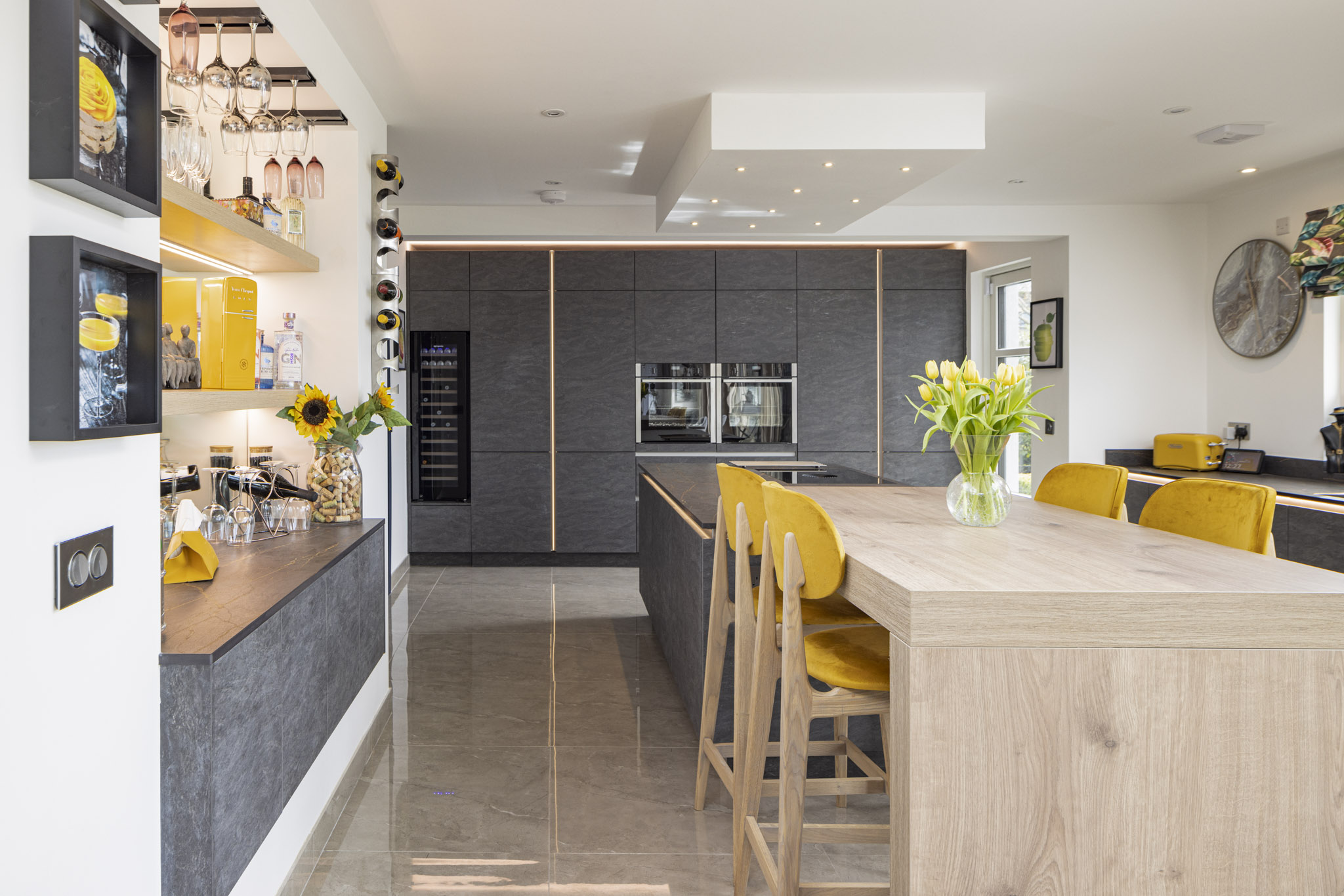
Is the Open Plan Kitchen Concept Losing Popularity?
Open plan kitchens are not disappearing, but their role is changing. Many Irish homeowners are now choosing more flexible layouts that balance openness with privacy and comfort.
By Ruth McKenna


Open plan kitchens are not disappearing, but their role is changing. Many Irish homeowners are now choosing more flexible layouts that balance openness with privacy and comfort.
The open plan kitchen has long been seen as the ideal layout for modern living. In interior design across Ireland, it became especially popular for its ability to bring cooking, dining, and living spaces together into one social hub.
However, design preferences rarely stand still. In recent years, homeowners, designers, and architects have begun to reassess whether open-plan kitchens still suit how people actually live.
The answer is not a simple yes or no. Instead, the open plan kitchen is evolving rather than disappearing.
The rise of the open-plan kitchen was driven by changes in lifestyle. Kitchens were no longer hidden service rooms but central spaces where families cooked, ate, worked, and socialised.
In Irish homes, open-plan layouts offered clear benefits. They allowed more natural light to flow through the house, created a sense of space in smaller properties, and made entertaining easier. For families, being able to cook while keeping an eye on children or guests was a major advantage.
For many years, the open-plan design represented modern living, flexibility, and openness.
While open-plan kitchens are still widely used, homeowners are becoming more aware of their downsides.
Noise is one of the most common concerns. In a fully open layout, sounds from appliances, television, and conversations all compete in the same space. This became more noticeable as homes started to serve multiple functions, particularly with the rise of working from home.
Smells and visual clutter are also factors. Cooking odours travel more easily, and mess is always on display. For some homeowners, this constant visibility feels stressful rather than relaxing.
Privacy has become another consideration. Not every moment at home needs to be shared across one large space, and many people now value the ability to separate activities when needed.
Rather than abandoning open plan kitchens entirely, many homeowners are choosing layouts that offer a middle ground.
This has led to the rise of zoned or broken-plan designs. These layouts maintain a sense of openness while introducing subtle divisions between areas. Changes in flooring, ceiling height, lighting, or cabinetry can define different zones without fully closing them off.
From an interior design perspective, this approach offers flexibility. Spaces can feel connected when desired, but still provide moments of separation for work, relaxation, or quiet.
It is important to note that open-plan kitchens are not inherently outdated. In many homes, they continue to work extremely well.
Large properties with generous square footage often benefit from open layouts, as there is enough space to manage noise and movement. Homes designed specifically for open plan living, with good acoustics and storage solutions, also tend to perform better.
Lifestyle plays a big role, too. Homeowners who enjoy entertaining, have young families, or prefer informal living often still favour open plan designs.
The key difference today is that open plan kitchens are being designed more thoughtfully, with greater attention to how the space will be used day to day.
Instead of one dominant trend replacing another, kitchen design is becoming more personalised.
Some homeowners are opting for partially enclosed kitchens with sliding doors, glazed partitions, or pocket doors. These allow the kitchen to open up when needed and close off at other times.
Others are using architectural elements such as islands, shelving, or half-height walls to create a sense of structure within open spaces. These features define the home without making it feel closed in.
This shift reflects a broader move away from one-size-fits-all design and towards layouts that respond to individual needs.
In Ireland, where homes vary widely in size, age, and layout, flexibility is increasingly important. Period homes, semi-detached houses, and new builds all present different challenges and opportunities.
Planning permission, structural constraints, and budget also influence whether a fully open plan kitchen is practical. As a result, many homeowners are now exploring alternatives that offer openness without sacrificing comfort.
Showrooms such as Kube Interiors reflect this shift by showcasing a wider range of layouts, from open-plan kitchens to more defined, zoned designs that still feel modern and connected.
Open plan kitchens are not disappearing, but their dominance is fading. They are no longer seen as the default solution for every home.
Instead, homeowners are asking more considered questions about how they live and what they need from their space. The result is a more balanced approach, where openness is combined with privacy, functionality, and comfort.
The future of kitchen design is not about rejecting open plan living altogether. It is about adapting it.
By introducing zoning, flexible partitions, and smarter layouts, homeowners can enjoy the benefits of open-plan kitchens while addressing their limitations. This evolution reflects a more mature approach to design, one that prioritises real life over rigid trends.
Open plan kitchens may no longer be the automatic choice, but when designed well, they remain a valuable and relevant option in modern Irish homes.