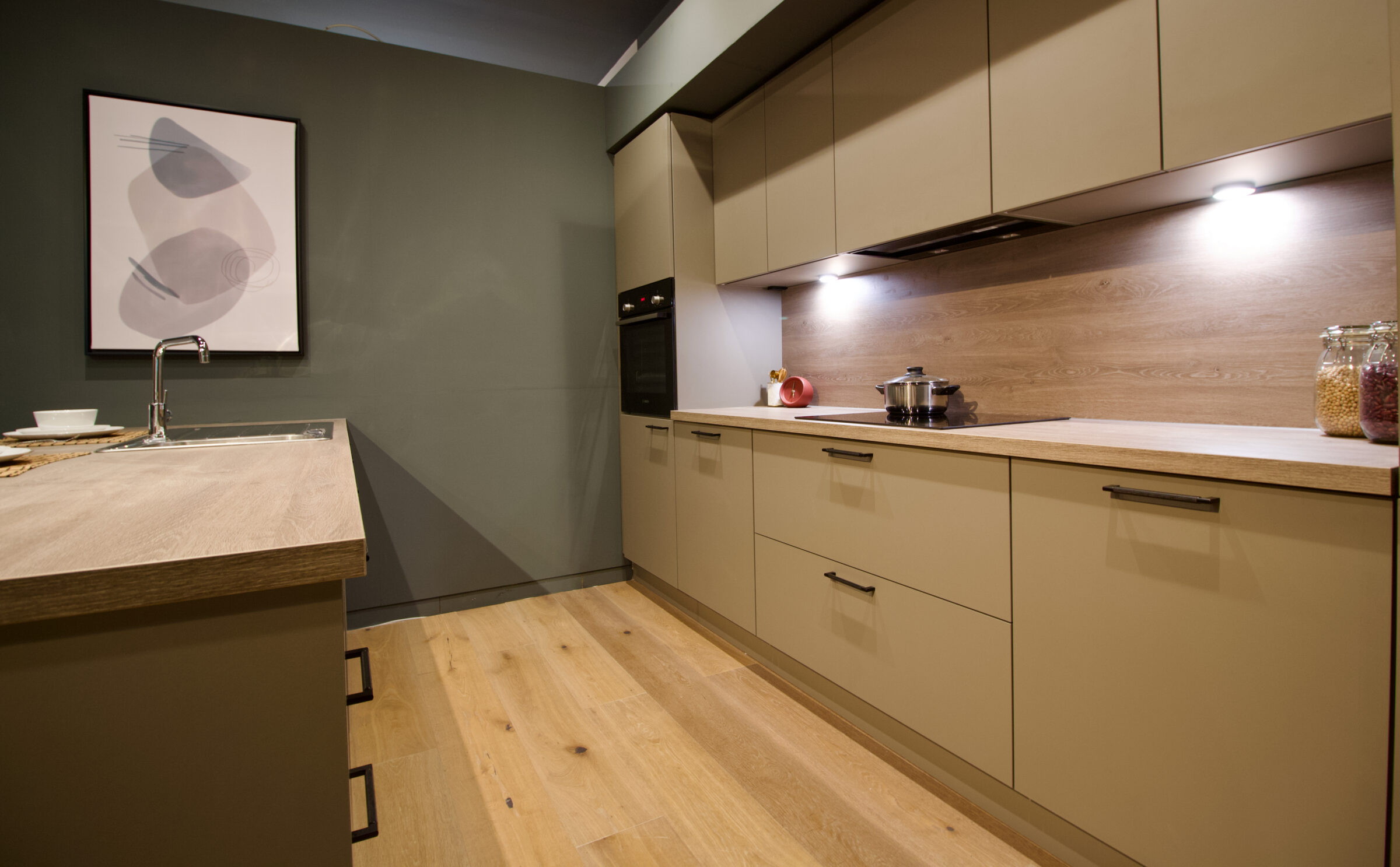
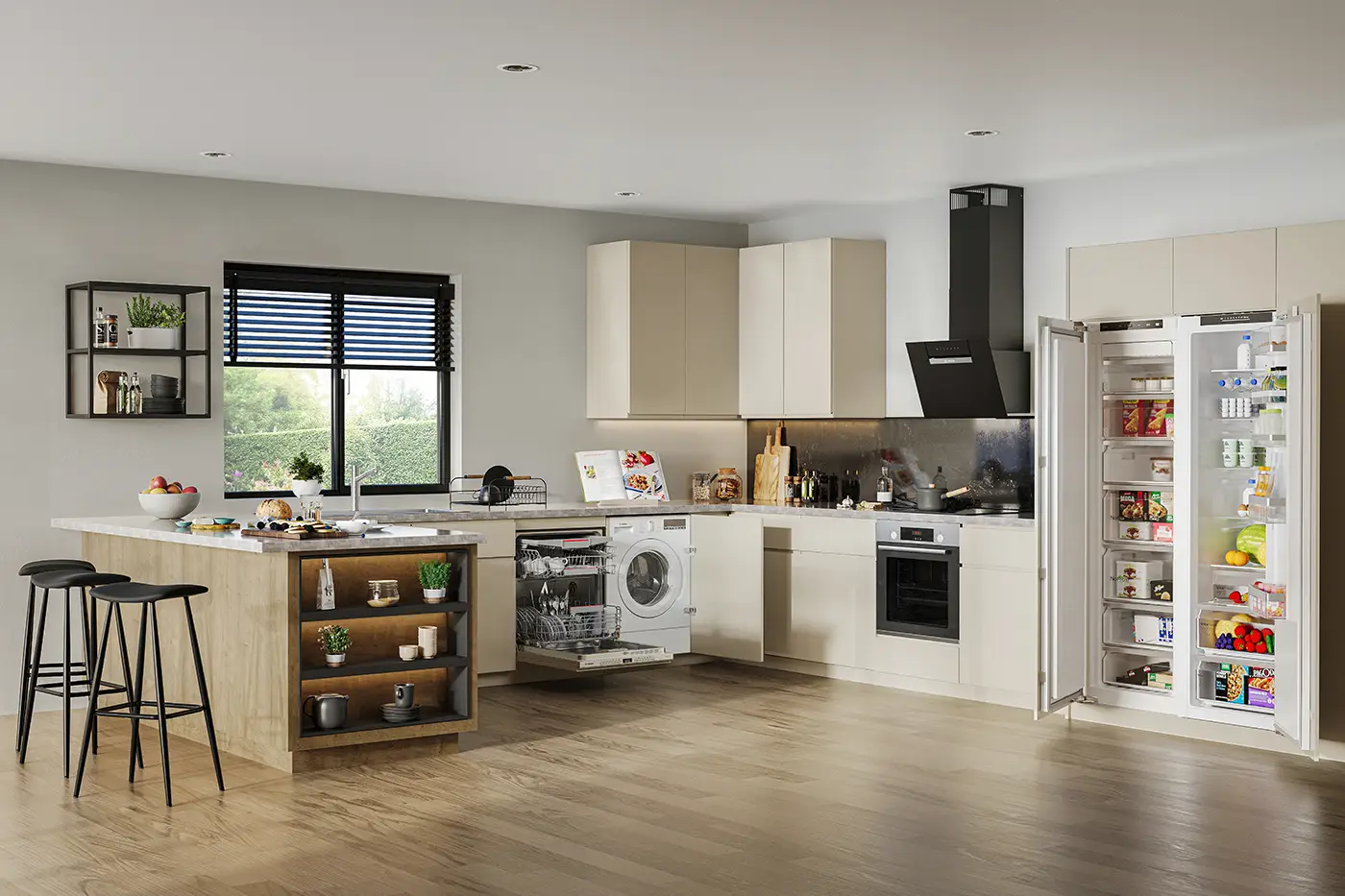
Sintered stone, also called porcelain, is generally the most durable kitchen worktop material, closely followed by quartz and granite.
Key Takeaways
- “Most durable” means resisting heat, stains, scratches, chips and water through years of daily use.
- Sintered stone and quartz offer low-maintenance toughness, granite natural strength, laminate value, wood warmth and marble luxury with care.
- Hot pans, heavy impacts and harsh cleaners are the three main durability tests.
Overview: Kitchen Worktops at a Glance
Here is how the main kitchen worktops and countertop materials compare:
- Ultra-durable: sintered stone, quartz, granite
- Durable with maintenance: solid surface, concrete, recycled glass
- Beautiful but softer: laminate, solid wood, marble
The Most Durable Worktop Overall: Sintered Stone / Porcelain
Sintered stone kitchen worktops, from brands such as Neolith, Dekton and Lapitec, are widely regarded as the most durable available.
- Natural minerals are compacted under immense pressure and fired at around 1,200 °C, creating a dense, non-porous slab.
- Hot pans, knives, red wine, curry and sunlight leave no mark.
- No sealing is needed, just a simple wipe clean.
- Printed patterns limit edge profiles, and very thin edges can chip under heavy impact.
- It sits at the top of the price range and needs specialist fabrication.
Quartz Worktops: Engineered Durability with Style
Quartz worktops combine around 90–95% natural quartz with resins and pigments, making them a favourite for busy family kitchens.
- At roughly 7 on the Mohs scale, quartz resists scratches and chips.
- Non-porous, so no sealing and excellent stain resistance.
- Use a trivet for very hot pans, as heat can discolour the resin.
Granite Worktops: Natural Stone Built to Last
Granite worktops are 100% natural stone, with every slab unique.
- Handles heat better than quartz and resists cuts and abrasion.
- Needs sealing to prevent staining; check and reapply periodically.
- Always view the actual slab, as natural variation can be significant.
Laminate Worktops: Budget-Friendly but Less Tough
Laminate worktops wrap a chipboard or MDF core in a decorative wear layer.
- Resists light scratches and stains, but hot pans can scorch it.
- Water at joints can cause swelling, so seal edges well.
- Ideal for utility rooms, rentals and tighter budgets.
Solid Surface Worktops (e.g. Corian-Type)
Solid surface worktops such as Corian are seamless, hygienic and non-porous. Light scratches and scorch marks can often be sanded out, but they are softer than stone and less tolerant of hot pans.
Solid Wood Worktops: Character with Care
Oak, walnut and iroko bring warmth, but timber dents, scorches and stains without regular oiling. Damage can be sanded out, so wood often works best on an island, paired with quartz on the main run.
Marble and Other Natural Stones: Beautiful but Softer
Marble worktops are prized for veining and pastry work, but they etch from lemon juice, vinegar and wine. Soapstone and slate are niche, heat-resistant alternatives.
Concrete and Recycled Glass: Durable but Maintenance-Conscious
Concrete is strong and heat-tolerant but porous, so it needs regular sealing. Recycled glass is eco-friendly and stain-resistant, though edges can chip if heavy items are dropped.
How to Choose the Best Countertop Material for Your Kitchen
Consider your budget, how much you cook and how much upkeep you will accept. For a broader comparison, read What is the best material for a kitchen worktop?
- Busy family, little time: quartz or sintered stone
- Love natural stone: granite
- Tight budget: laminate
- Sculpted, seamless shapes: solid surface
- Farmhouse warmth: solid wood
Mixing materials, such as quartz on main runs with a timber island, balances beauty and toughness. A kitchen design consultation is the easiest way to compare samples side by side.
Care and Maintenance: Getting Maximum Life from Any Worktop
- Sintered stone: wipe clean, no sealing.
- Quartz: non-abrasive cleaners, no bleach, trivets for hot pans.
- Granite and natural stone: reseal periodically and use pH-neutral cleaners.
- Laminate and wood: keep joints dry, use chopping boards and oil timber regularly.
- Always follow manufacturer care guidance to protect your warranty.
Frequently Asked Questions
Is quartz or granite more durable for a busy family kitchen?
Both last decades. Quartz is more stain-resistant and maintenance-free; granite copes better with heat.
Can I put hot pans directly on my kitchen worktop?
It is safest not to. Sintered stone and granite cope best, but use trivets as a habit.
Which kitchen worktop adds the most value to my home?
Quartz, granite and sintered stone are widely seen as premium upgrades.
How thick should a durable kitchen worktop be?
Typically 20–30 mm for quartz and granite, 12–20 mm for sintered stone and around 38 mm for laminate.
Can I replace my worktops without changing my cabinets?
Usually, if cabinets are sound and level. Check they can support heavier stone, and get an accurate survey.