A timeless kitchen floor is essential for creating a space that feels considered, balanced, and enduring — particularly in luxury modern kitchens, where materials are expected to look refined long after trends have moved on. The most successful kitchen floors combine durability with subtle design choices, allowing cabinetry, worktops, and layout to evolve without the floor ever feeling dated.
Kitchen flooring ideas can make or break the overall aesthetic of a room, which is why choosing the right material matters as much as selecting the right kitchen itself. From natural stone and porcelain tiles to wood-effect finishes, timeless flooring is about restraint, proportion, and longevity rather than bold statements.
Popular Flooring Materials That Stand the Test of Time
Certain materials have remained popular for decades because they consistently perform well both visually and practically.
Natural stone, including limestone and marble, has been used in kitchens for generations. Its organic variation and muted tones help it age gracefully, developing character rather than looking worn.
Porcelain tiles offer a modern alternative, delivering the look of stone with far lower maintenance. Advances in manufacturing mean today’s porcelain can convincingly replicate limestone, concrete, or even timber, while offering excellent durability and water resistance.
Wood-effect porcelain and engineered wood flooring provide warmth and texture without overwhelming the space. These options are especially popular in homes that favour natural materials but require performance suited to everyday kitchen use.
Timeless Design Options for Kitchen Floors
Beyond material choice, format and finish play a major role in how timeless a kitchen floor feels.
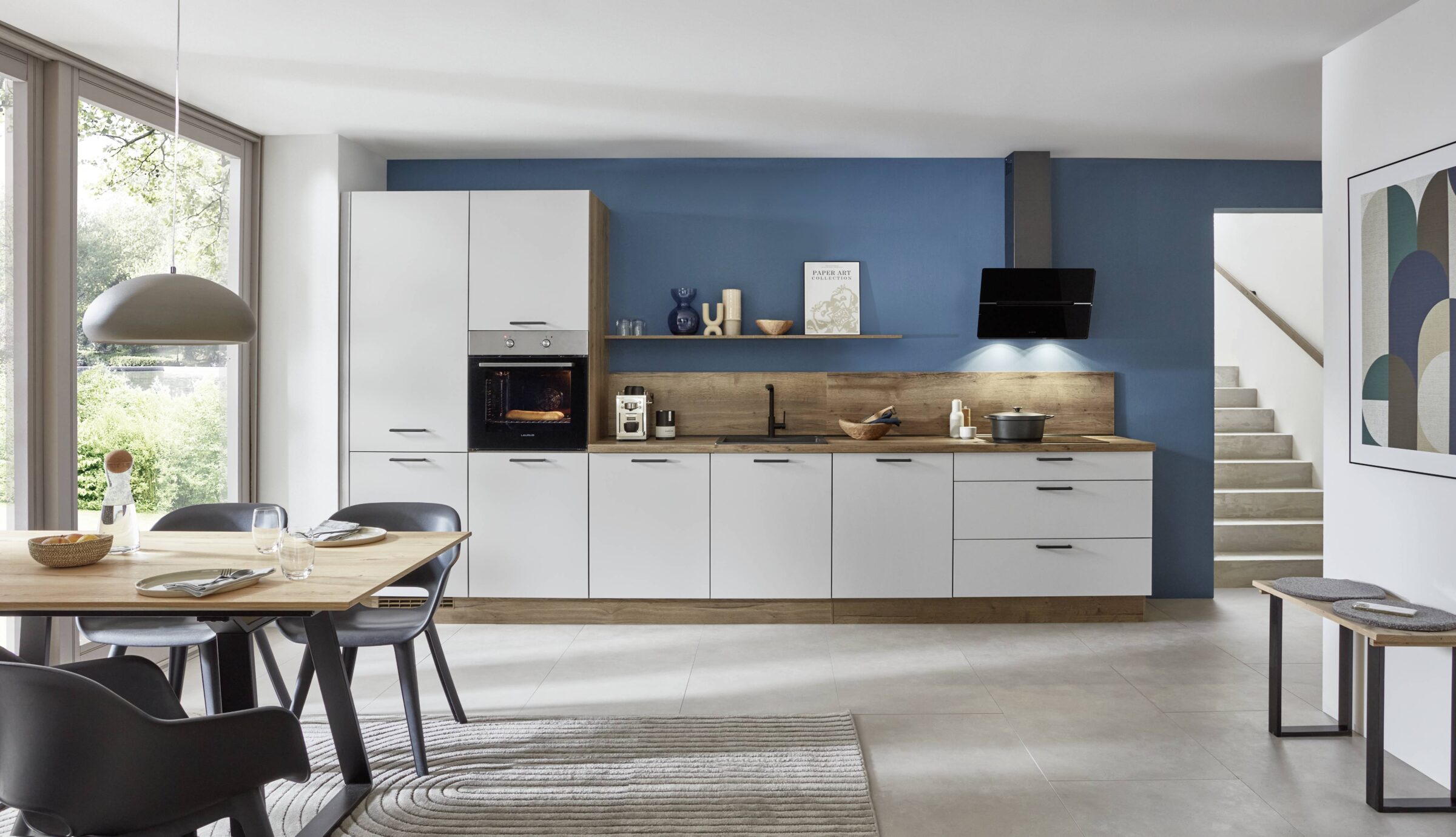
Large-format tiles with minimal grout lines create a calm, expansive surface that doesn’t visually interrupt the space. This approach works particularly well in open-plan kitchens, where continuity is key.
More character-led options — such as terrazzo, slate, or terracotta tiles — can still feel timeless when used thoughtfully. The key is subtlety: neutral colour palettes, soft variation, and finishes that feel natural rather than highly polished.
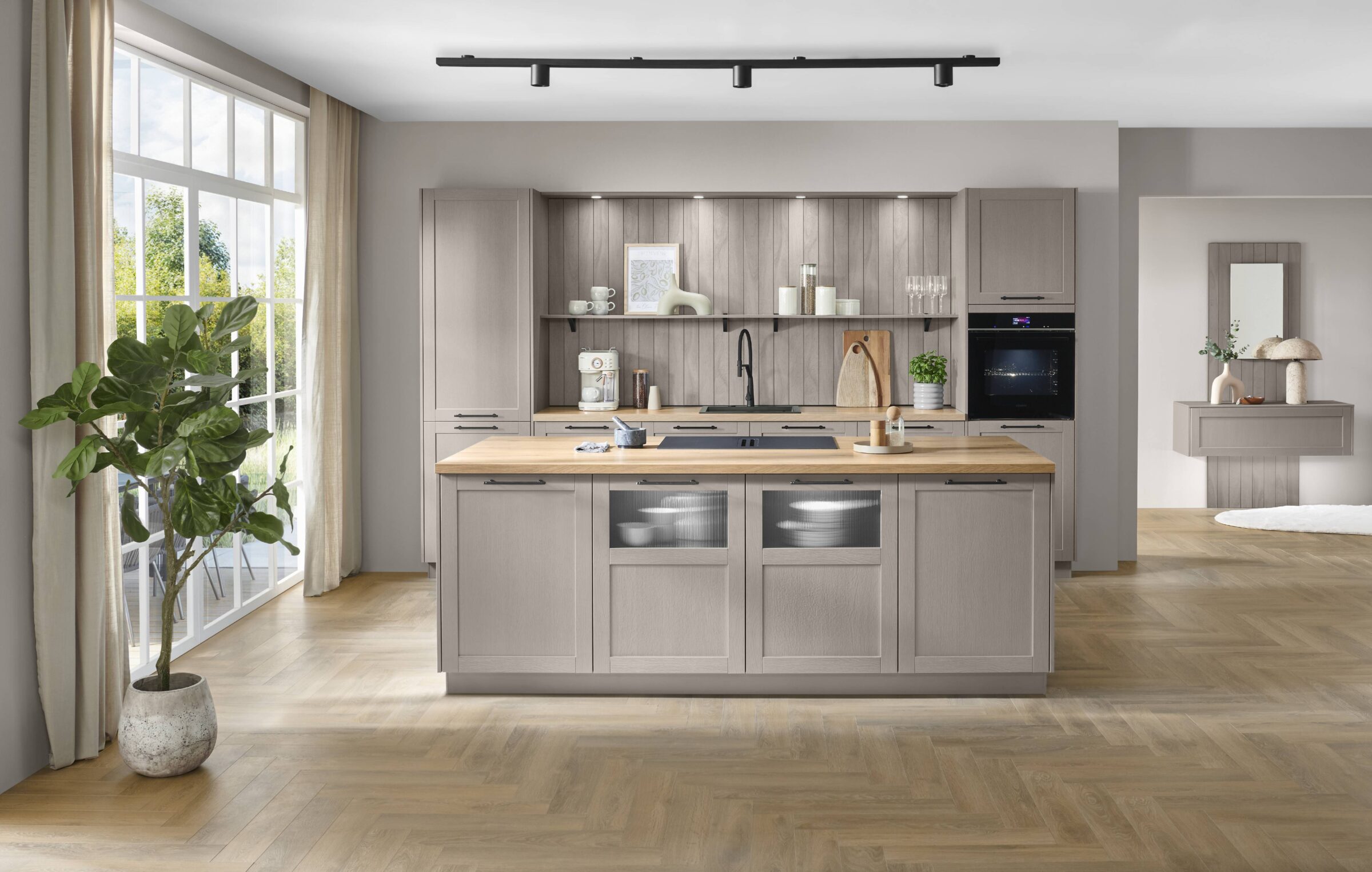
Patterned layouts like herringbone can also endure, provided the pattern is restrained and paired with simple cabinetry and walls.
Kitchen Inspiration and Style Compatibility
A timeless floor should complement your kitchen style rather than dominate it.
- Traditional kitchens often suit classic chequerboard patterns, stone tiles, or subtle wood-effect porcelain
- Modern kitchens benefit from large-format porcelain or softly textured concrete-effect tiles
- Shaker-style cabinetry pairs beautifully with natural stone, engineered wood, or warm neutral porcelain
Natural materials help bridge the gap between traditional and contemporary styles, making them a safe long-term choice.
Flooring Choices for Small Kitchens
In compact kitchens, flooring has a significant impact on how spacious the room feels.
Lighter tones help reflect light and prevent the space from feeling enclosed. Large-format tiles reduce visual clutter by minimising grout lines, while neutral colours such as beige, light grey, or soft stone tones create a calm foundation.
Wood-effect porcelain or engineered wood can add warmth without overwhelming a small kitchen, especially when paired with simple cabinetry and uncluttered layouts.
Natural and Rustic Flooring Options
Rustic doesn’t have to mean dated. Natural stone such as slate or limestone brings texture and authenticity that rarely goes out of style.
Terracotta tiles and brick-style floors can also feel timeless when used sparingly and balanced with clean-lined cabinetry. These materials work particularly well in period homes or kitchens designed to feel warm and lived-in.
Underfloor heating is worth considering with stone or terracotta flooring, as it enhances comfort while preserving the natural look of the material.
Patterned Flooring: Timeless or Trend-Led?
Patterned flooring can be timeless if handled carefully.
Herringbone and chequerboard patterns have been used for decades and continue to feel relevant when colour contrast is subtle. Small-scale geometric patterns can add texture without overpowering the room, especially in neutral tones.
The key is ensuring the pattern complements the kitchen style rather than becoming the focal point.
Maintaining a Timeless Kitchen Floor
Longevity isn’t just about appearance — maintenance matters too.
Porcelain tiles are among the lowest-maintenance options, requiring only regular cleaning. Natural stone needs sealing and gentle care but rewards that effort with character that improves over time.
Slip resistance, moisture tolerance, and durability should always be prioritised, particularly in busy households.
Key Considerations When Choosing Kitchen Flooring
When selecting a timeless kitchen floor, consider:
- Durability under daily use
- Resistance to moisture and staining
- Ease of maintenance
- Compatibility with your cabinetry and worktops
- How the floor will look if other elements change
A well-chosen floor should support the overall design rather than define it.
Kitchen Floor Trends vs Timeless Choices
Current trends often favour large-format tiles, natural stone, and wood-effect porcelain. While trends can inspire, timeless choices tend to sit just behind them — neutral, natural, and adaptable.
This is why many homeowners working with Kube Interiors select flooring as part of a complete design approach, viewing it alongside cabinetry, layout, and lighting within their bespoke Kitchens rather than as a standalone decision.
Benefits of Choosing Timeless Kitchen Flooring
A timeless kitchen floor:
- Adds long-term value to a home
- Reduces the need for future replacement
- Supports changing interior styles
- Creates a sense of calm and cohesion
Rather than following fashion, it creates a stable foundation for the kitchen to evolve around.
Flooring Around Kitchen Islands
Kitchen islands present an opportunity to introduce subtle contrast.
A continuous floor keeps the space cohesive, while a slight shift in tone or texture around the island can add interest without disrupting flow. Patterned tiles or warmer finishes can help define the island zone while remaining visually harmonious.
The most timeless kitchen flooring choices are those rooted in natural tones, subtle texture, and proven durability that allow the kitchen to evolve without ever feeling dated.
By prioritising balance, quality materials, and understated design, homeowners can create kitchens that remain relevant and refined for decades to come.