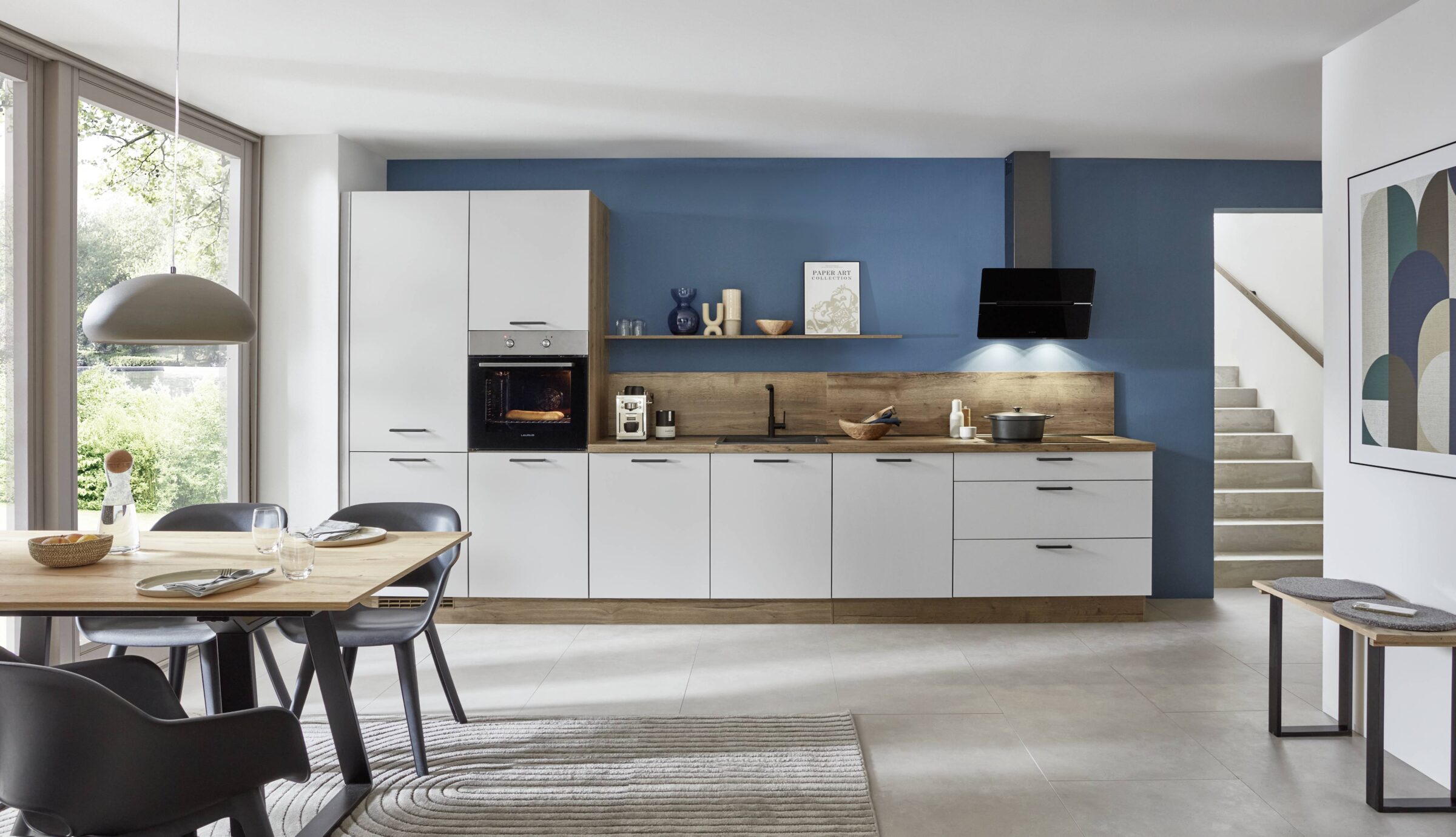
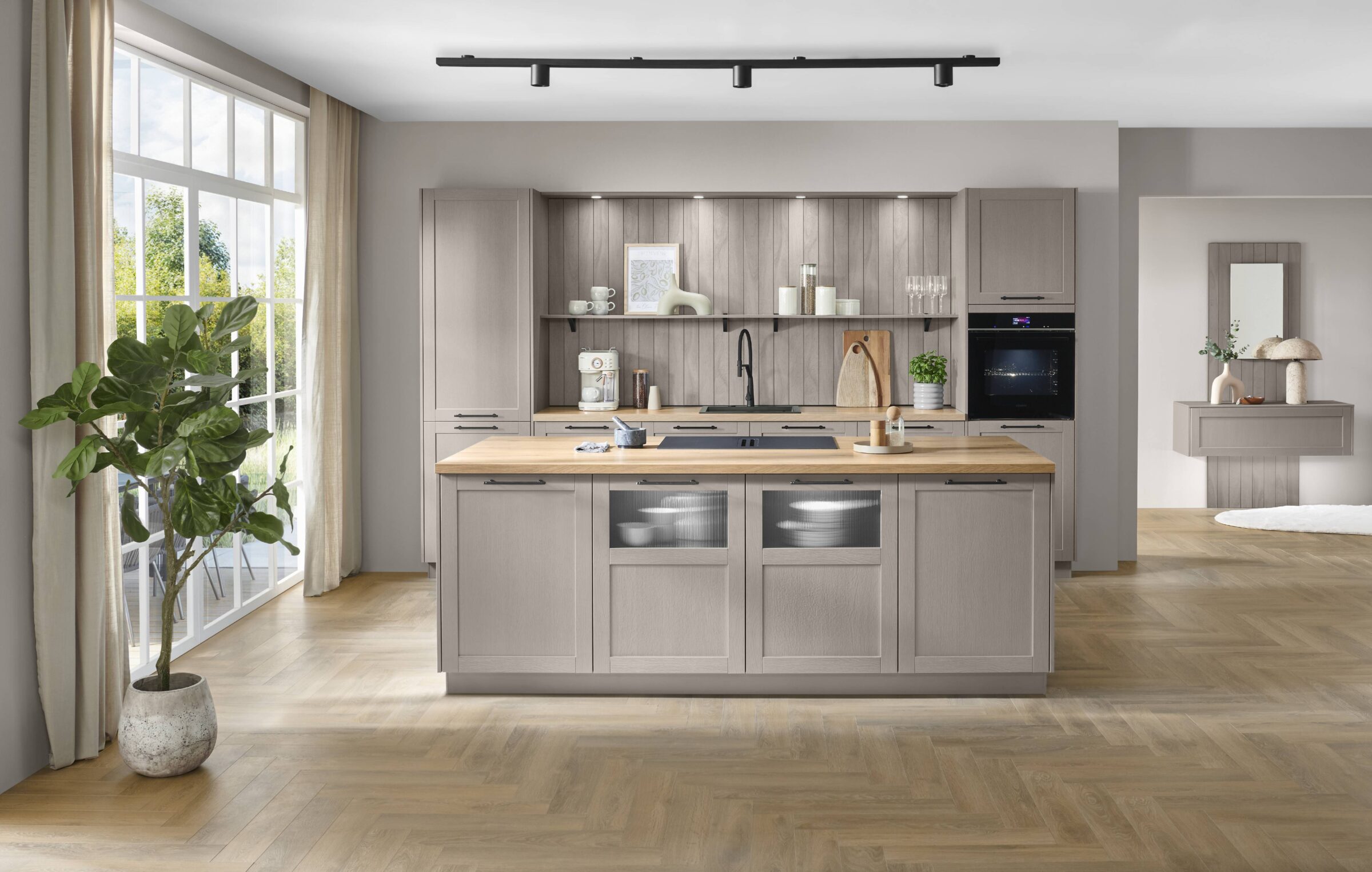
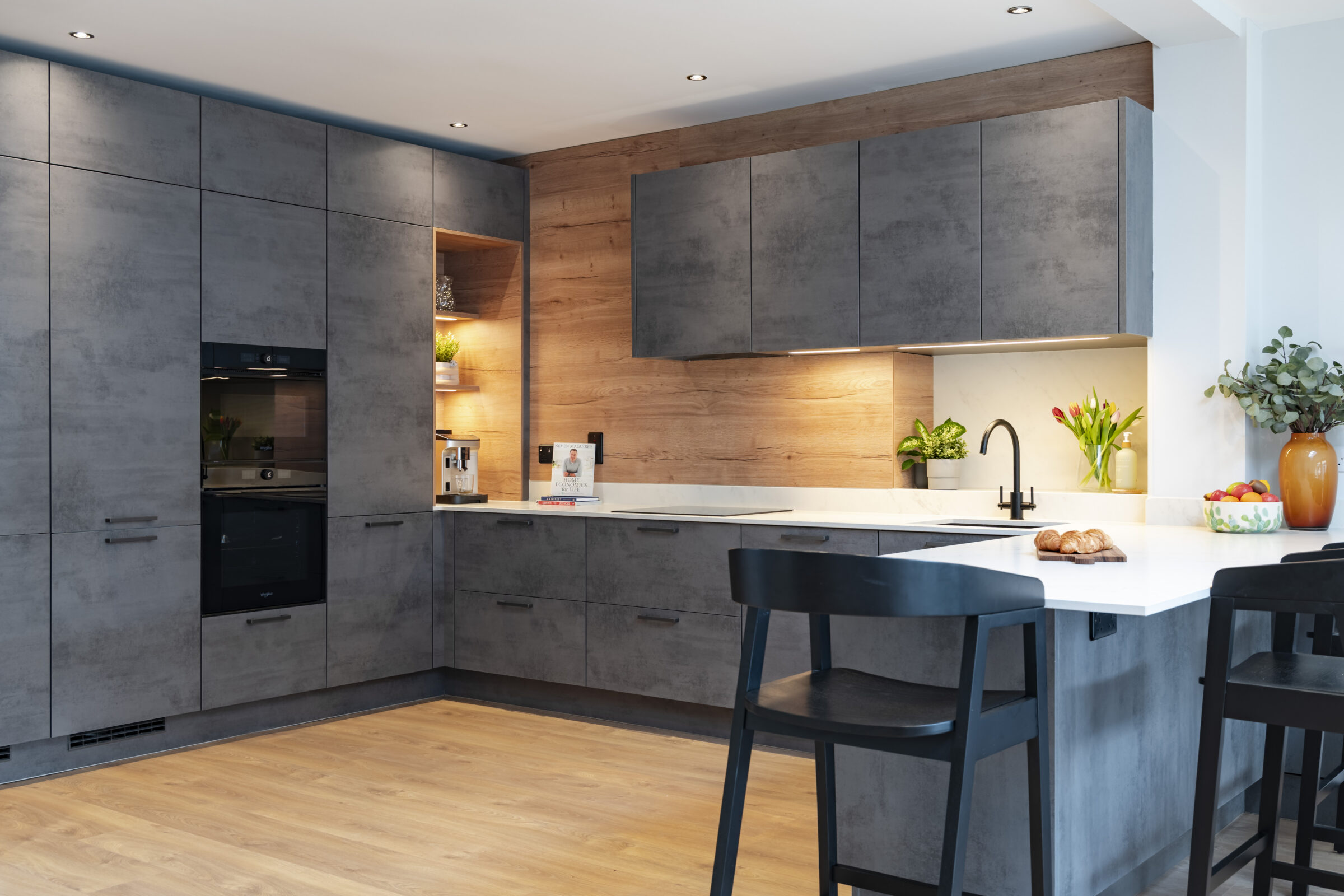
When a kitchen feels balanced, calm and visually harmonious, there is usually a clear design principle behind it. One of the most influential of these principles is the golden ratio.
The golden ratio is a mathematical concept, sometimes referred to as the golden number, with a value of approximately 1:1.618. It has been used for centuries in architecture, art and interior design to create visual balance and aesthetic harmony. This same ratio appears in nature, from spiralling seashells to rose petals, which is why it feels instinctively pleasing to the human eye.
In kitchen design, the golden ratio helps determine ideal proportions between elements such as cabinetry, kitchen islands, worktops, splashbacks and overall layout. While designers do not apply strict calculations to every measurement, the principle of proportion guides decisions to ensure a cohesive and visually appealing space.
At Kube Interiors, proportion is considered at every stage of the design process. Our approach to designing luxury kitchens is rooted in balance, scale and architectural clarity, ensuring each kitchen layout feels refined as well as functional.
Understanding the Golden Ratio in Kitchen Layout
The golden ratio describes a relationship where the smaller part relates to the larger part in the same way the larger part relates to the whole. In practical terms, this means creating balance between height, width and depth within a kitchen space.
In a well-designed kitchen layout, no single element overwhelms the room. Cabinet runs feel proportionate. Islands relate naturally to the surrounding space. Ceiling height complements cabinetry scale. Storage integrates seamlessly rather than appearing bulky.
Applying proportional thinking ensures the kitchen feels intentional rather than accidental.
Why Proportion Matters in Kitchen Design
Modern kitchens combine multiple components within one environment. Cabinetry, appliances, lighting, seating areas and work zones must all work together visually and functionally.
Poor proportion can create several issues:
- An oversized island that dominates circulation
- Tall units that overpower base cabinets
- Worktops that appear visually heavy
- Storage that feels cluttered rather than streamlined
Even high-end materials cannot compensate for incorrect proportions. Luxury kitchen design relies on clean lines and visual clarity, meaning imbalance is immediately noticeable.
By focusing on proportion, designers create kitchens that achieve both functionality and aesthetics.
Applying the Golden Ratio to Key Kitchen Elements
Kitchen Island Proportion
The kitchen island is often the focal point of the room. Its size should reflect the overall dimensions of the kitchen space.
A common proportional guide is for the island length to measure approximately two thirds of the wall it faces. This creates breathing space at either end and prevents the layout from feeling compressed.
Width also matters. An island that is too deep can restrict movement, while one that is too narrow may lack visual presence. Clearance around the island should typically allow between 1,000 and 1,200 millimetres for comfortable circulation.
When proportion is respected, the island feels integrated into the design rather than imposed upon it.
Cabinet Height, Width and Depth
Cabinet proportions play a major role in visual harmony. The golden ratio can help guide:
- The relationship between tall units and base cabinets
- The spacing of wall cabinets
- The depth of storage units
- The alignment between cabinetry and ceiling height
In standard ceiling heights, tall cabinetry that extends close to the ceiling often feels more cohesive than units that leave inconsistent gaps above. In open-plan kitchens with higher ceilings, vertical extension maintains architectural balance.
Accurate measurements are essential here. Proportion begins with understanding the dimensions of the wall space and ensuring cabinetry enhances rather than overwhelms it.
Worktop and Countertop Thickness
Worktop thickness affects the visual weight of the kitchen. Slimmer countertops often complement modern, handleless designs and create a lighter aesthetic. Thicker stone worktops may suit more architectural or bespoke kitchen projects.
The correct thickness depends on the overall scale of the room. Proportion ensures materials feel appropriate rather than exaggerated.
The Golden Ratio and the Kitchen Work Triangle
Although the classic kitchen work triangle is not mathematically derived from the golden ratio, it follows the same principle of balance and efficiency.
The distance between the sink, hob and refrigerator should support smooth movement. If these elements are too close together, the kitchen feels cramped. If too far apart, efficiency suffers.
Balanced spacing contributes to both practicality and visual order.
Work Zones and Functional Design
In contemporary kitchen layouts, many designers focus on dedicated work zones for preparation, cooking and storage.
Applying proportional thinking ensures each zone has adequate space without disrupting flow. For example, a kitchen island can act as a transitional element between cooking and seating areas, reinforcing both function and design harmony.
The goal is always to create a kitchen space that feels intuitive to use and visually cohesive.
Using Proportion in Small Kitchens
In smaller kitchens, proportion becomes even more critical. Compact layouts magnify imbalance.
Oversized appliances, deep cabinets or bulky handles can quickly dominate limited space. Thoughtful scaling, consistent cabinet widths and appropriate appliance sizing maintain visual harmony.
Even in compact kitchen design, applying golden ratio principles helps create openness and balance.
Open-Plan Kitchens and Visual Weight
Modern Irish homes increasingly favour open-plan kitchen living areas. In these spaces, proportion extends beyond the kitchen itself.
The island should relate to adjacent dining furniture and living zones. Cabinet heights must feel consistent with surrounding architectural elements. The golden ratio helps ensure the kitchen integrates seamlessly into the wider room rather than appearing as a separate block.
When proportion is respected across the entire open-plan layout, the result is a cohesive and visually appealing space.
A Guiding Principle for Timeless Kitchen Design
The golden ratio is not a rigid formula. It is a guiding principle that informs proportion in custom kitchen design.
Experienced designers develop an instinct for balance. They consider negative space, scale, alignment and circulation together. When proportions are correct, the kitchen feels calm, functional and refined.
Trends in colour and finish may change over time. Proportion remains constant. A kitchen grounded in balanced relationships between cabinetry, worktops and layout will always feel more timeless.
Ultimately, the golden ratio explains why some kitchens simply feel right. It works quietly in the background, shaping a space that is both aesthetically pleasing and practical.