Choosing the right flooring is one of the most important design decisions in luxury modern kitchens, balancing durability, comfort, water resistance, and long-term style. The kitchen floor must cope with daily wear while visually anchoring the space within the wider home.
At Kube Interiors, we approach kitchen flooring as both a technical and design-led decision. The best choice isn’t simply the toughest material available, but the one that complements your cabinetry, layout, and how you actually use your kitchen day to day.
Key Takeaways
- The best kitchen flooring balances durability, water resistance, comfort, and aesthetics
- Porcelain tile remains the most hard-wearing and water-resistant option for busy homes
- Luxury vinyl offers warmth, comfort, and excellent performance in open-plan layouts
- Engineered wood brings natural character when moisture is well managed
- Your final choice should reflect lifestyle, underfloor heating, and overall kitchen design
What to Consider First When Choosing Kitchen Flooring
Kitchens are the hardest-working rooms in any home. They experience more spills, foot traffic, and temperature changes than almost any other space. Before comparing materials, it’s important to identify your priorities — practicality, comfort, or visual impact.
Key factors to consider:
- Water resistance — essential around sinks, dishwashers, and cooking zones
- Durability — dropped cookware, chairs, and constant movement take their toll
- Ease of cleaning — floors should cope with grease, crumbs, and regular mopping
- Comfort underfoot — particularly important in kitchens used frequently
- Noise reduction — crucial in open-plan kitchen–living spaces
- Slip resistance — especially for families or multi-generational households
- Underfloor heating compatibility — increasingly common in modern Irish homes
- Design continuity — many homeowners prefer a single floor flowing from kitchen into dining or living areas
Flooring should support the overall design of your kitchen, not compete with it. This is particularly relevant when planning bespoke or fitted kitchens, where every element is designed to work together.
The Main Types of Kitchen Flooring (Overview)
Porcelain & Ceramic Tiles
Pros: Extremely durable, waterproof, ideal for underfloor heating
Cons: Hard underfoot, colder without heating
Luxury Vinyl (LVT/LVP)
Pros: Waterproof, warm, quiet, comfortable
Cons: Lower-quality products may dent or wear
Engineered Wood
Pros: Natural warmth, stable construction, refinishing potential
Cons: Sensitive to standing water
Solid Wood
Pros: Timeless character, long lifespan with care
Cons: High maintenance, moisture-sensitive
Laminate
Pros: Affordable, quick installation
Cons: Vulnerable to water ingress
Natural Stone
Pros: Premium appearance, timeless appeal
Cons: Requires sealing and careful maintenance
Polished Concrete
Pros: Seamless, contemporary, extremely durable
Cons: Hard underfoot, specialist installation required
Porcelain and Ceramic Tile: The Most Practical Choice
Porcelain and ceramic tiles remain a benchmark for kitchen flooring due to their durability and resistance to moisture.
Porcelain tiles are denser and less porous than ceramic, making them particularly suitable for high-traffic family kitchens and open-plan spaces. Neither material requires sealing, and both cope exceptionally well with spills, heat, and cleaning.
Why tiles work well in kitchens:
- Excellent water and stain resistance
- Ideal for underfloor heating
- Available in stone, concrete, marble, and wood-effect finishes
- Suitable for minimalist and contemporary designs
Points to consider:
- Harder underfoot than vinyl or wood
- Crockery may break when dropped
- Professional installation is usually recommended
Slip resistance is important — matt or lightly textured finishes are generally best for everyday kitchens.
Design, Size and Finish Choices for Tiles
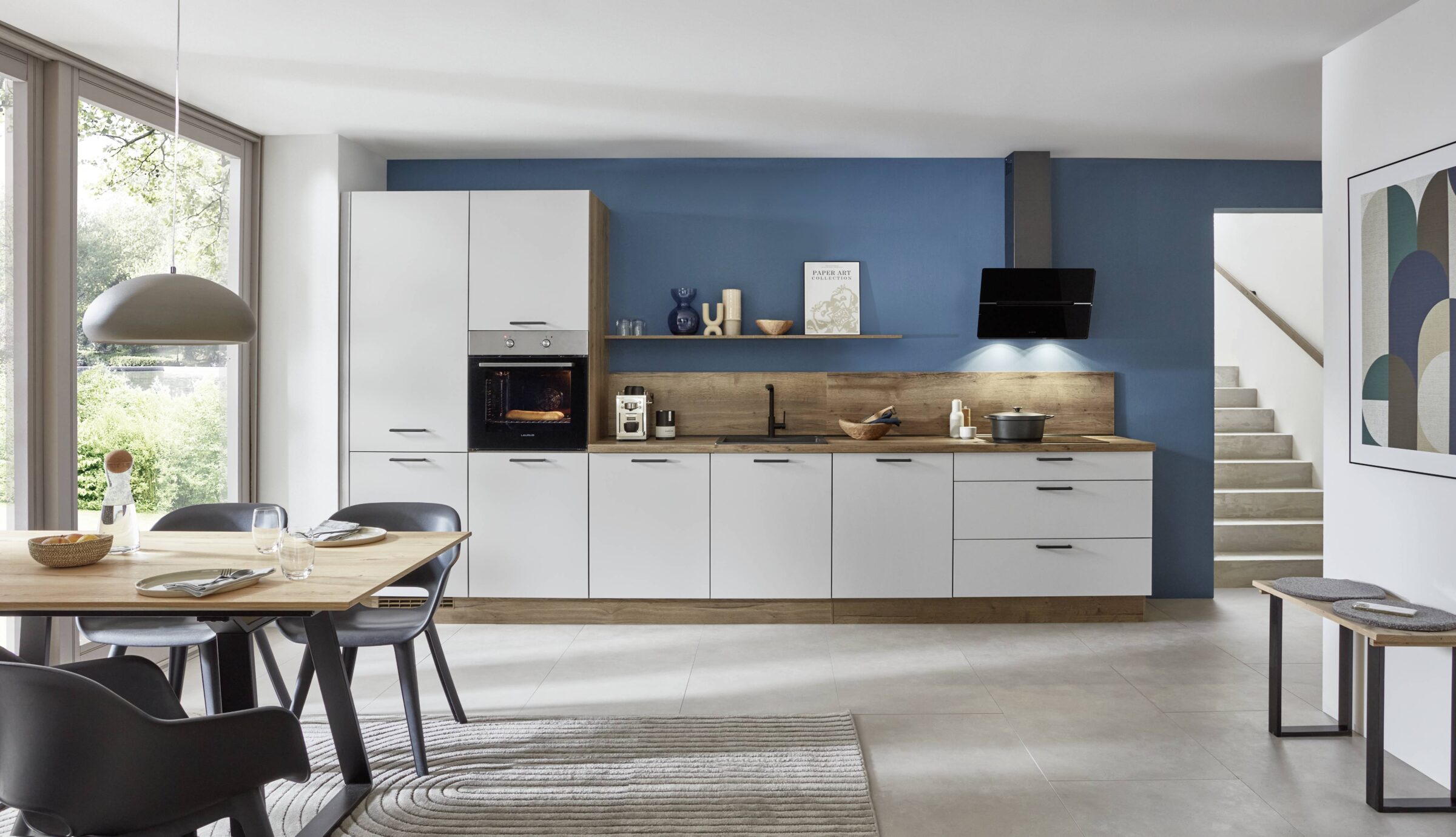
Large-format tiles reduce grout lines and create a clean, expansive look, especially in open-plan layouts. Neutral tones such as soft greys, warm beiges, and stone effects pair well with modern cabinetry.
In luxury modern kitchens, large-format porcelain tiles with subtle texture are often used to create seamless transitions between cooking, dining, and living zones.
Luxury Vinyl Flooring: Comfort Meets Performance
Luxury vinyl tile (LVT) and plank (LVP) flooring has evolved significantly and is now one of the most popular choices for modern homes.
High-quality vinyl is fully waterproof, warmer underfoot than tiles, and quieter in open-plan layouts. It’s particularly well suited to family kitchens or homes where comfort is a priority.
Advantages:
- Waterproof and easy to maintain
- Comfortable and warm
- Excellent sound absorption
- Realistic wood and stone effects
Limitations:
- Heavy appliances can cause denting if not protected
- Lower-quality products wear faster
Sheet vinyl remains a cost-effective option for utility kitchens or rental properties, though LVT offers a more premium finish.
Wood Flooring in the Kitchen: Engineered vs Solid
Wood floors add warmth and character, especially in kitchens that flow into living areas.
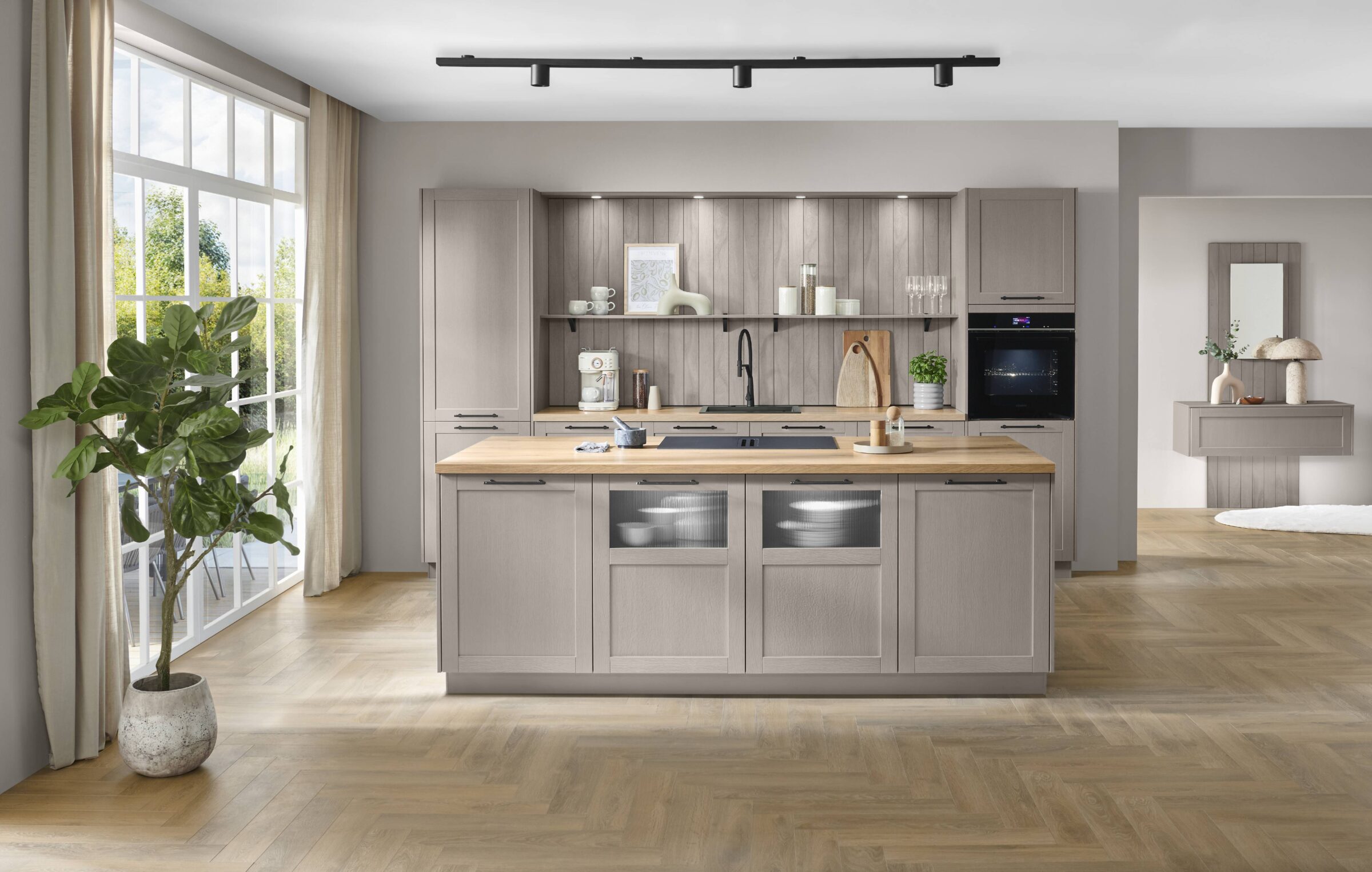
Engineered wood is generally the better choice for kitchens. Its layered construction provides improved stability, making it more resistant to humidity and temperature changes.
Solid wood, while beautiful, requires careful sealing and maintenance and is less suitable for kitchens with high moisture levels or underfloor heating.
With correct care — prompt spill clean-up, protective mats, and appropriate finishes — wood flooring can perform well in design-led kitchens.
Laminate, Natural Stone, and Polished Concrete
Laminate
A budget-friendly option that mimics wood effectively, but must be kitchen-rated and protected from moisture.
Natural Stone
Materials like limestone, slate, and marble bring a premium, timeless feel. Regular sealing and careful cleaning are essential.
Polished Concrete
Ideal for contemporary extensions and minimalist homes. Extremely durable but hard underfoot and requires specialist installation.
Installation and Maintenance Matter
Even the best flooring can fail if installed incorrectly. Proper subfloor preparation, moisture checks, and correct installation methods are essential.
Ongoing care — regular cleaning, protective pads, and addressing minor issues early — will significantly extend the life of your kitchen floor.
Matching Flooring to Your Lifestyle
- Busy family kitchens: Porcelain tiles or quality LVT
- Open-plan living: Large-format tiles, engineered wood, or vinyl
- Design-led spaces: Natural stone or polished concrete
- Comfort-focused homes: Cushioned vinyl or engineered wood
Kitchen flooring should be chosen with the long term in mind. A well-considered material will support both the practical demands of cooking and the overall design of your kitchen for years to come.